Resource Centre
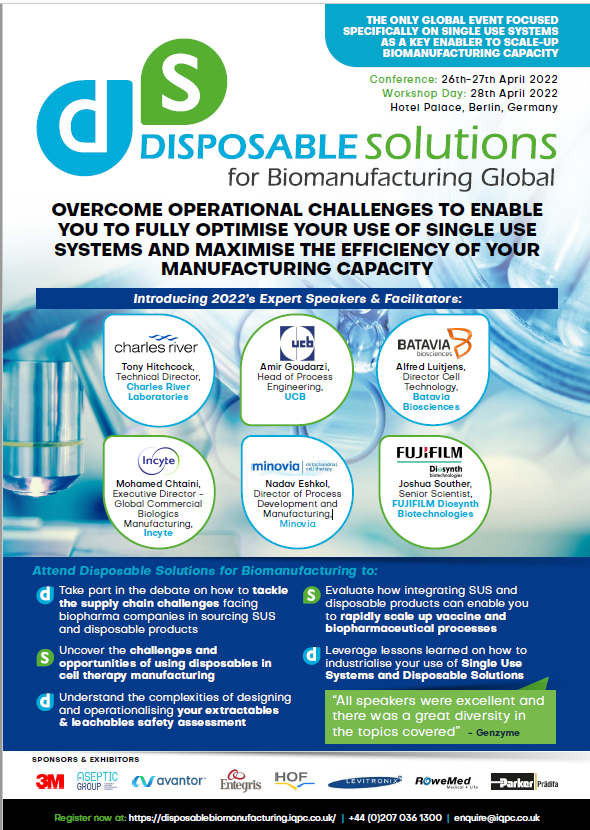
Disposable Solutions for Biomanufacturing 2022 Agenda
The only global event focused specifically on Single Use Systems and Disposable Solutions as a key enabler to scale-up biomanufacturing capacity We’re back - live and in-person. It’s an extremely exciting time for biomanufacturing as advanced biological therapies continue to develop at a rapid ...
2022 Brand New Resources
The Current Challenges, Solutions and Benefits of Scaling-up Your Use of Single Use Systems/Single Use Technologies
Ahead of this year's Disposable Solutions for Biomanufacturing Forum, industry experts explore the biggest challenges facing biomanufacturing facilities in scaling-up the use of Single Use Systems (SUS) and the key initiatives for overcoming scalability issues with SUS. 42% of respondents work for manufacturers/suppliers of SUS/Single Use Technologies (SUT) and 50% of respondents work for companies that manufacture vaccines.
This report also includes additional insights from Tony Hitchcock, Technical Director at Charles River Laboratories, Julien Muzard, EMEA Field Applications Technologist at Entegris, Hani El-Sabbahy, Advanced Application Engineering Specialist at 3M and Amir Goudarzi, Head of Process Engineering at UCB, on the greatest benefits of scaling-up the use of SUS/SUT, to help biomanufacturing companies reach higher outputs, improve system flexibility, and drive biomanufacturing processes into the future.
Download the full report now >>

Disposable Solutions for Biomanufacturing 2022 Attendee List
Download our 2022 attendee list today!
A Journey Through the Forum: Disposable Solutions for Biomanufacturing Global 2022
In this short video you can find out more about what to expect at this year's Disposable Solutions for Biomanufacturing Global Forum. This one-minute video provides a summary of the 2022 top speakers, key themes to be addressed, and what you can look forward to across the 3-event days, to help you address today’s emerging challenges and fully optimise your use of Single Use Systems.
If you would like more information about this forum taking place 26 - 28 April 2022 in Berlin, including the full list of speakers, sessions, sponsors and event opportunities then please view the full event agenda here.
Want to learn how to drive your biomanufacturing processes forward? Register for Disposable Solutions for Biomanufacturing Global here.
Join in the conversation or share this at #DisposableSolutions
2020 World Class Resources
Staying Ahead of the Innovation Curve with Single-Use Systems
As single-use bioprocessing moves toward
commercial-scale manufacturing applications, the industry is demanding more
innovation.
Ahead of the 2020 Disposable Solutions for Biomanufacturing
Forum, Pharma IQ had the opportunity to speak with Billy Sisk, Life Sciences Industry Manager EMEA, Rockwell Automation,
on the main challenges for solution providers to stand out in the biopharma
manufacturing space, while accessing the possible opportunities for staying
ahead of the innovation curve in single-use systems.
Download the full
interview on the right >>
Other key benefits to downloading the interview:
- Understand some of the biggest issues in single-use manufacturing and how new technology, such as augmented reality, can address these challenges
- Analyse the tangible benefits of using automation in the biopharma manufacturing space
- Address if continuous bioprocessing is on the horizon and how it can reduce the cost of goods
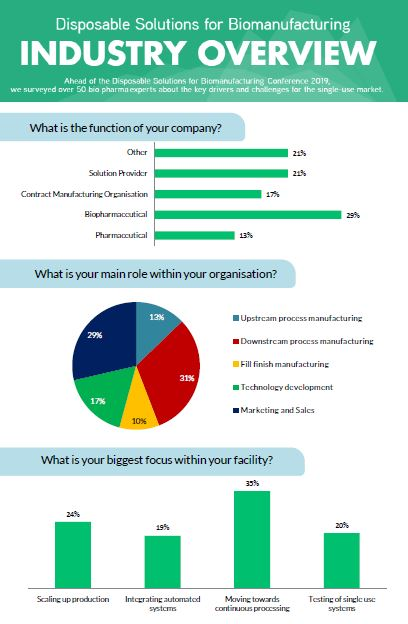
Disposable Solutions: Industry Overview
Based on the opinions of over 50 biopharma experts, we have put together this industry overview discussing the latest drivers and challenges for the single-use market. This report covers topics including investigating continuous bioprocessing, flexibility in single-use systems, and the need to seek new products from suppliers.
View the report now - Click 'Download' on the right >>
Key Findings Include:
- 43% of respondents indicated that technology is the main hindrance in achieving continuous processing
- Sustainability in disposable solutions is extremely important to manufacturers - on a scale of 1-10 (10 being most important), sustainability was ranked 7.5.
- The majority of manufacturers actively search for new technologies and solutions every 6-12 months
Click Download on the right to view the report now >>
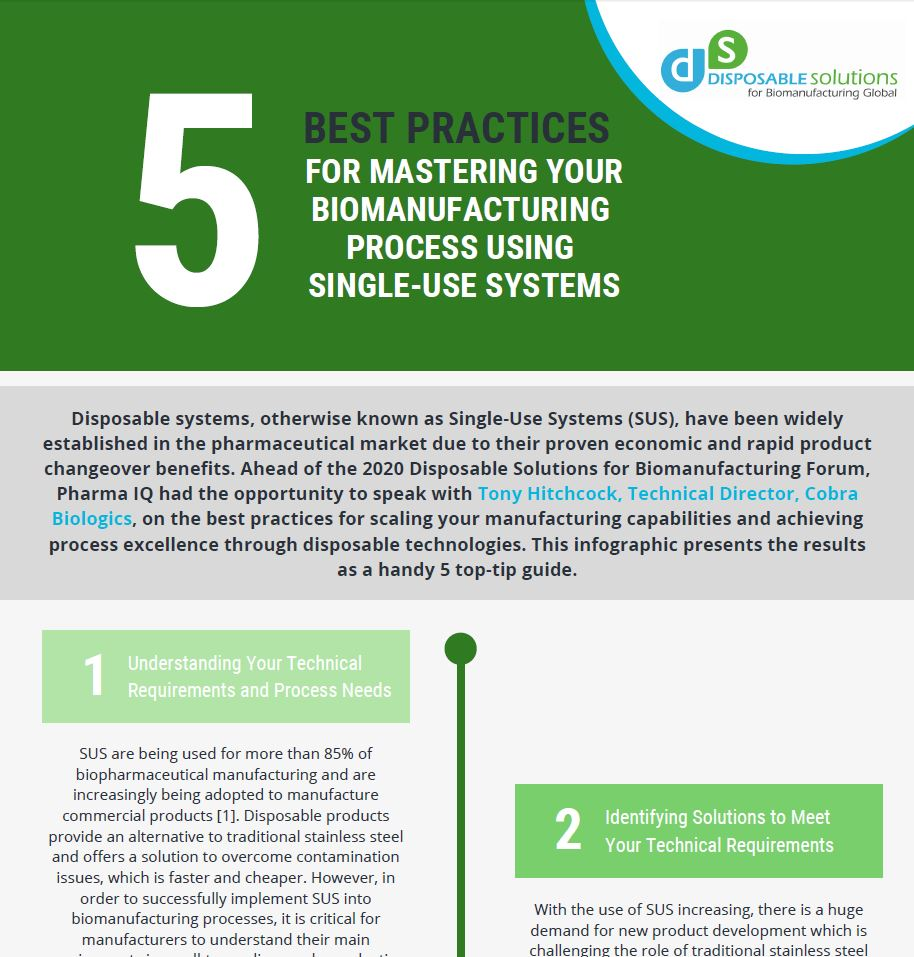
5 Best Practices for Mastering Your Biomanufacturing Process Using Single-Use Systems
Single-Use Systems are being used for more than 85% of biopharmaceutical manufacturing and increasingly being adopted to manufacture commercial products. The use of disposable products offer advantages such as flexibility, reduced capital cost and reduced water use.
Ahead of the 2020 Disposable Solutions for Biomanufacturing Forum, Pharma IQ had the opportunity to speak with Tony Hitchcock, Technical Director, Cobra Biologics, on the best practices for scaling your manufacturing capabilities and achieving process excellence through disposable technologies. This infographic presents the results as a handy 5 top-tip guide.
Download the infographic on the right >>
Other key benefits to downloading the infographic:
- Understand the industrialisation of single use
solutions: learnings, attention points and opportunities
- Gain an in-depth insight into the solutions that meet the technical requirements of vendors
- Identify supply chain requirements – what you need from potential suppliers and how you can develop agreements to achieve this
2019 Exclusive Resources
Achieving Scalability and Flexibility with Disposable Solutions
Over the years, single use technologies have been expanding in different applications, meaning that there are now a multitude of single use alternatives for different elements of bioprocessing.
In this article, we spoke to Sharyn Farnsworth, Principal Scientist- Manager Cell Culture, Upstream Process Development, Fujifilm Diosynth Biotechnologies and Francis Verhoeye, Global Pilot Operations Leader, Zoetis to discuss the benefits of embedding scalability and flexibility in single use systems, and the challenges of making systems more flexible and scalable.
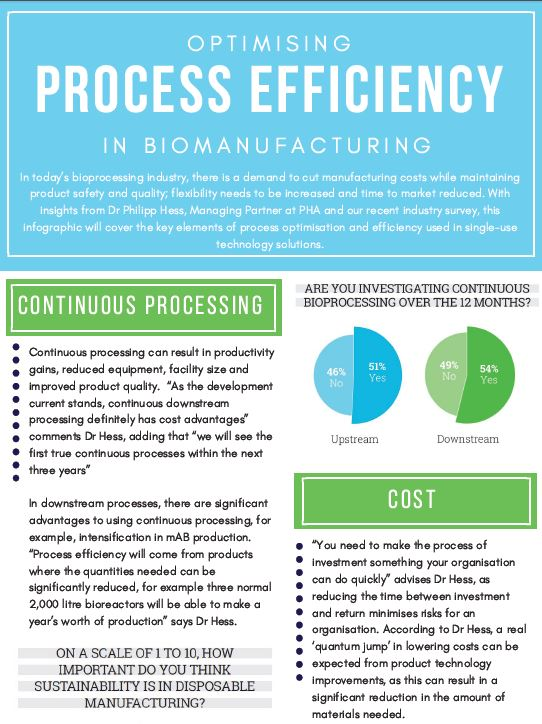
Infographic: Optimising Process Efficiency in Biomanufacturing
In today’s bioprocessing industry, there is a demand to cut manufacturing costs while maintaining product safety and quality; flexibility needs to be increased and time to market reduced. With insights from Dr Philipp Hess, Managing Partner at PHA and our recent industry survey, this infographic will cover the key elements of process optimisation and efficiency used in single-use technology solutions.
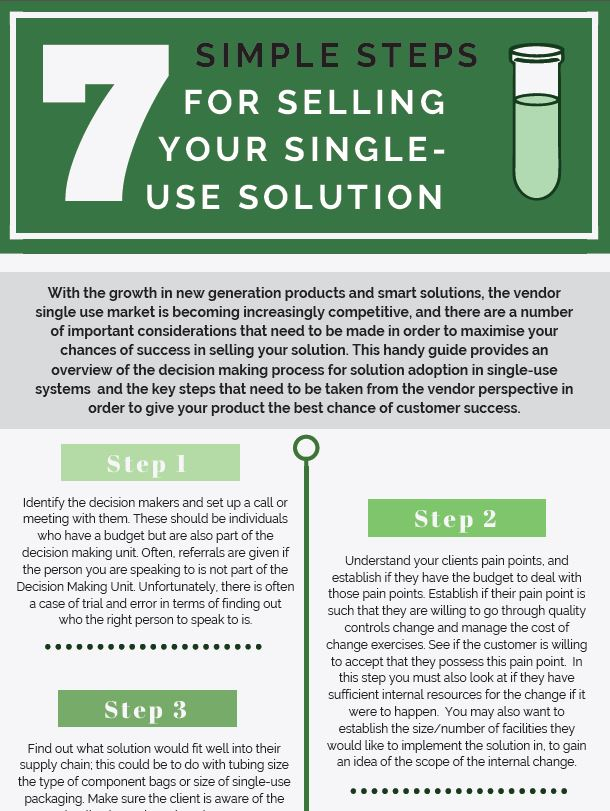
7 Simple Steps for Selling Your Single-Use Solution
There are a number of important considerations that need to be made in order to maximise your chances of success in selling your solution. This handy guide provides an overview of the decision making process for solution adoption in single-use systems and the key steps that need to be taken to give your product the best chance of customer success.
This infographic includes information on:
- Identifying decision makers and the decision making unit
- Establishing the scale of implementation for your customer
- Preparing your data to ensure it will pass SOPs, QA and validation procedures
Sponsorship

Disposable Solutions for Biomanufacturing | Sponsorship Opportunities
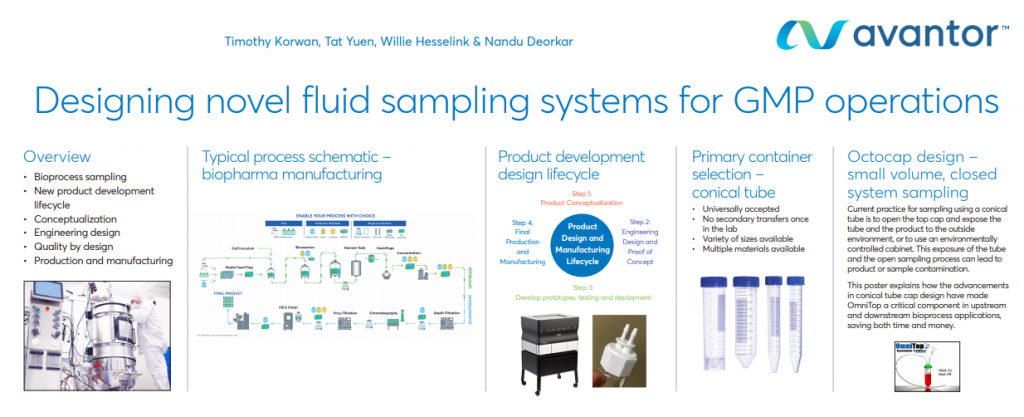
Designing novel fluid sampling systems for GMP operations
Sampling is a requirement in every process step of biopharmaceutical manufacturing, with an increasing demand on accuracy the closer it comes to final finish. Avantor´s infographic demonstrates a 4-step process to develop a highly efficient and accurate sampling system, covering product conceptualization considerations, engineering design and proof of concept, Quality by Design and final production and manufacturing.

Implementation of single-use powder delivery systems in continuous biopharmaceutical manufacturing processes: A case study from Avantor
Single-use technologies have seen impressive progress over the last decade, but there are still significant needs for these technologies to be applied in upstream and downstream processes. The infographic will give an insight on the advantages of implementing a single-use powder delivery system in the continuous manufacturing process and shows a case-study for delivering exact quantities of clump free material for the delivery of buffer prep materials.
In Partnership With:

QUESTIONS?
Address: IQPC Ltd, 129 Wilton Road,
London SW1V 1JZ
Telephone: +44 (0) 113 210 042
Fax: 44 (0) 207 368 9301
Email: enquire@iqpc.co.uk

©2026 IQPC. All rights reserved.